
In an AL3 file, the 5LAG (Location Address Group) and 5SLC (Sub-Location Group) play very important roles in representing how property or risk locations are structured within a commercial insurance policy — especially for lines like Commercial Property, BOP (Business Owners Policy), Inland Marine, and Farm policies.
Typical hierarchy example:
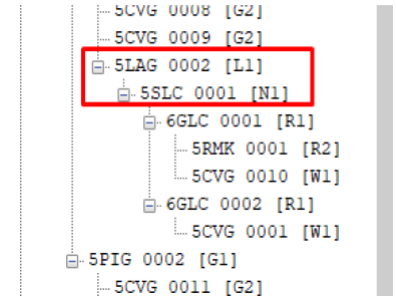
5LAG — Location Address Group
5LAG is used to define each insured location’s address details within the policy.
It identifies where the risk is located — such as a building, premises, or insured location.
Contains information like:
- Street address
- City
- State/Province
- ZIP/Postal Code
- County or Fire District
Importance:
- Identifies the risk location — crucial for underwriting, rating, and inspection.
- Determines premium factors — e.g., fire protection class, territory rating, flood zone.
- Links coverage and sublocations — many coverages (5CVG) or buildings (5SLC) attach under a specific 5LAG.
- Regulatory & compliance requirement — insurers must report accurate risk addresses.
5SLC — Sublocation Group
Purpose:
5SLC represents a sub-location within a location — such as a building, unit, or structure on the same premises.
It allows insurers to record multiple buildings or risk items under one main location (5LAG).
Contains information like:
- Sublocation Description
- Sublocation Number
- Sublocation Type Code
- Number of Mortgagees
- Street address
- City
- State/Province
- ZIP/Postal Code
- County or Fire District
Importance:
- Allows multiple buildings under one location (e.g., Building A, B, and C on one property).
- Supports accurate coverage linkage — each 5SLC can have its own coverages (5CVG), additional interests, and remarks.
- Provides detail for risk evaluation — construction, occupancy, protection, and exposure (COPE) data are tied here.
- Improves data structure consistency — avoids redundancy and makes AL3 more modular.





Leave A Comment